Australian gas prices have held at $10Gj over the past few days. I have been relatively confident that the East Coast gas export cartel will not repeat the Ukraine War price shock at home, knowing, as it does, that the public won’t stand for it again. However, I have a bad feeling every time our
The post Mad King must put Australians first for gas appeared first on MacroBusiness.
 Judge accuses regional council of having a "bee in their bonnet" and of losing perspective in its case against a wind project approval.
The post “A bee in their bonnet:” Judge says council has “lost perspective” in its legal case against wind project appeared first on Renew Economy.
Last week, I presented detailed data on how the sharp reduction in net overseas migration (NOM) in Canada, which turned negative last year, has suppressed rents. After experiencing explosive rental growth in 2022 and 2023 amid record NOM, Canada has experienced 17 consecutive monthly declines in rents: Canadian rents are now tracking at a 33-month
 Massive, multi-gigawatt solar and battery project has started on the environmental journey, after a short but bruising legal suit it says was to find Native Title holders.
The post Enormous Top End solar and battery project seeks federal green tick appeared first on Renew Economy.
Chinese property is OK post-LNY but the year has started poorly. The secondary market is still awash. EV sales have dropped post-incentives. But watch this space. If there is one winner globally from the American Madman’s war, this is it. Broader car sales are similar. Consumer depression continues. Coal isn’t growing, but its sovereign value
Support independent media www.ettemedia.com
Jan Fran picks an issue of the week that is living rent free in her head. Right now, it's Home Affairs Minister Tony Burke's decision to grant asylum to some members of the Iranian women's soccer team, while passing legislation that prevents people from conflict and crisis-affected countries from visiting Australia.
Australia’s largest real estate group, Ray White, has issued a stern warning that proposed changes to negative gearing and the capital gains tax (CGT) discount would trigger a major shock to the rental market. Ray White managing director Dan White and chief economist Nerida Conisbee told 10,500 members that the federal government is considering reducing
Four horses, 400 km, and a fight over a gas pipeline that will cross the state’s most fertile plains
 An epic horseback journey from Narrabri to Newcastle aims to spotlight the farms, landscapes and landholders caught up in one of NSW's most contentious fossil fuel projects.
The post Four horses, 400 km, and a fight over a gas pipeline that will cross the state’s most fertile plains appeared first on Renew Economy.
When the war in the Middle East first broke out, I warned that Australia faced a triple energy threat of higher petrol/diesel prices, higher gas prices, and higher electricity prices. Vivek Dhar, Head of Commodities and Sustainable Economics at CBA, published a detailed analysis warning of similar risks, arguing that Australia’s energy system is facing
The American Madman raised the prospect of talks to resolve a dispute that has disrupted oil markets and nearly stopped shipping in the vital Strait of Hormuz. “Iran wants to make a deal, and I don’t want to make it because the terms aren’t good enough yet,” Trump stated, adding that Tehran’s promise to give
The post Trump mulls deal in the mirror appeared first on MacroBusiness.
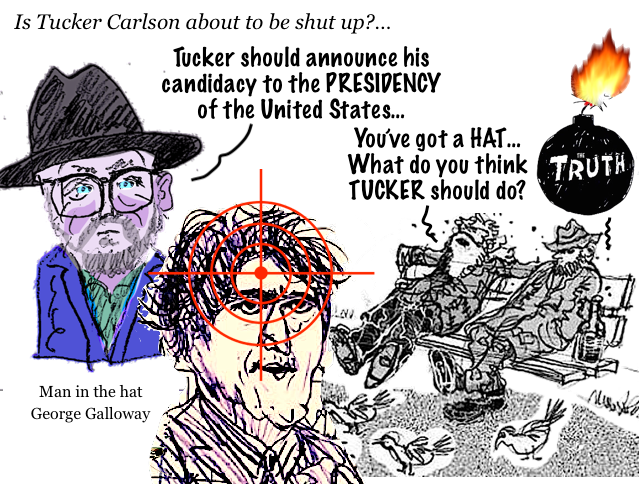
Conservative activist and commentator Tucker Carlson has been at the center of a row after he claimed that the CIA is purportedly preparing a criminal referral against him to the DOJ.
As the world continues to assess the impact and implications of a protracted closure of the Strait of Hormuz amid the ongoing war in the Middle East, Australia is facing major challenges to its fuel security. According to the latest snapshot provided by Federal Energy Minister Chris Bowen, Australia possesses stocks worth 36 days of
While everyone knows about the risks of oil and refined fuels, there is much more coming from the Persian Gulf than just those. Morgan Stanley helps us summarise where the shortages will be in due course. Sulphur Concentration: The Middle East accounts for 45% of the world market for sulphur (fertilizer/chemical chain), a crucial component
As happens every year, voters in two Tasmanian upper house electorates will go to the polls on May 2 to elect their representative for the next six years.
This will be one of a number of elections happening in early May, with the Nepean by-election in Victoria held on the same day and Farrer the following week.
The two seats are Huon and Rosevears. Huon covers the rural south-east of Tasmania, while Rosevears covers areas to the north-west of Launceston along the western shore of the Tamar River. Both seats cover rural fringe areas near one of Tasmania’s bigger cities.
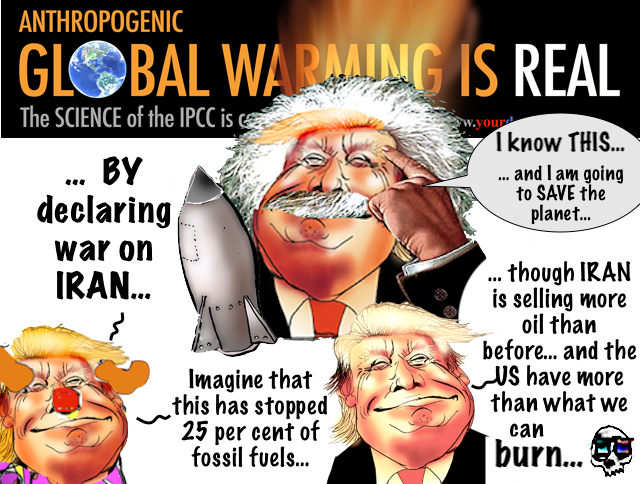
What we are currently witnessing regarding Iran, Ukraine and Venezuela is essentially the very same war. Its aim is to prevent, by military means, the decline of American-Western hegemony in the world, which is threatened above all by the growing strength of China. In Ukraine, the aim is to weaken Russia, an important partner of China.
The very same war