 Australian Energy Market Operator says its system and market operation functions should not be separated amid an in-depth review of its governance arrangements.
The post “It is paramount:” AEMO says system and market operator functions must be kept together appeared first on Renew Economy.
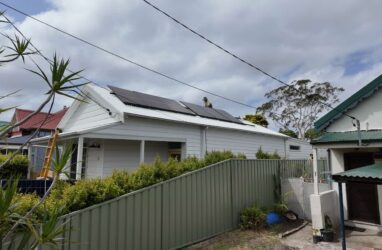 The Clean Energy Council has approved a new PV module with around 25 per cent more generating capacity than most of its competitors – promising more power over less rooftop space.
The post Powerful new rooftop solar panel promises system sizes “previously out of reach” appeared first on Renew Economy.
 Huge wind project that survived LNP's perilous project call-in process kicks off full federal environmental assessment, with novel plan for battery with every turbine.
The post A battery with every turbine: Huge wind project seeks federal green tick with novel storage plan appeared first on Renew Economy.
Rising energy costs drive fertiliser prices up because modern fertiliser production is fundamentally an energy-intensive industrial process. The link is direct, mechanical, and unavoidable: energy is both a feedstock and a fuel. For nitrogen fertilisers (i.e., urea, ammonium nitrate, and ammonia), natural gas is the single biggest input cost, used as a feedstock in the
 A potentially game-changing offshore wind turbine installation solution is set to make its way to Australia with help from local renewables outfit Energy Estate.
The post Offshore wind installation tech promises to change logistics game, cut reliance on deep-water ports appeared first on Renew Economy.
Joe Walker interviewed former immigration department bureaucrat-turned-influencer Abul Rizvi last year. During the interview, Rizvi openly acknowledged that slowing population ageing accounted for approximately “80%” of the motivation behind the 2001 changes that significantly increased Australia’s intake of migrants, particularly international students. WALKER: And so back in the late 90s, early 2000s, when you were


Retired Gen. Charles Wald had a word for it.
“One glitch with a girls’ school,” he told Fox News anchor Martha MacCallum, “which was really sad.”
There is no hubris like BHP hubris. When you put yourself in front of an angry dictator you’ve been gouging for twenty years, eventually you’ll get yours. China has widened a ban on BHP iron ore for the second time in two weeks, escalating a months-long contract dispute with the world’s third-largest supplier of the
The post Iron ore rips as China dismantles BHP appeared first on MacroBusiness.
One Nation proposes allowing wage-earning couples with children to split their income and file joint tax returns, potentially saving thousands of dollars in taxes each year. Senator Pauline Hanson launched One Nation’s income-splitting policy in January, which permits couples with at least one dependent child to combine their incomes and divide the total equally for
Let’s ask the question that’s plaguing the Australian bourgeoisie’s nightmares today: will the oil shock of 2026 crash house prices? I’m pleased to inform you that the answer is becoming increasingly “yes.” As a rule of thumb, every 10% rise in the oil price adds 0.4% to inflation. Given that Iran is winning the war
The post Will the oil shock of 2026 crash house prices appeared first on MacroBusiness.
For decades, Israel has tried to trap US presidents in a war with Iran. All have dodged the trap until now. The American Idiot has walked straight into the trap, either due to his own stupidity or Jeffrey Epstein pictures, or similar, and the trap has snapped shut behind him. Consider how bad a day
The post Iran is winning the war appeared first on MacroBusiness.
9:00 – The draft federal redistribution for the Australian Capital Territory’s three federal electorates is due to be released this morning. Unfortunately I will be busy for most of the time until midday, but I will post my analysis of the redistribution as soon as I can.
My plan is to follow a similar routine as I did with the Tasmanian redistribution two week sago.
 Western Australia is preparing to hit go on a set of rule changes for rooftop solar and battery systems to help stabilise the grid and make it more attractive for households to join virtual power plants.
In the weeks since news of the war in Iran first hit the airwaves, the Albanese government has been attempting to reassure the Australian public that there is no real concern about fuel supply in Australia. The focus was on claims that fuel stocks are adequate and above the minimum mandatory levels. On Thursday, Energy
The post Welcome to the great Aussie fuel crisis appeared first on MacroBusiness.